
- HOME EV CHARGING
Do You Need a Panel Upgrade for a Home EV Charger?
Check your panel before you buy a charger
Buying an electric vehicle doesn’t automatically mean replacing your electrical panel. Some homes can support a Level 2 charger with their existing service. Others may need a lower charging setting, a different installation plan or a panel or service upgrade. The useful question is how much charging you need and what your home can support.
Start with how much you drive
Think about how far you drive on a typical day and how long the car is parked overnight. If you mostly take short trips and have plenty of time to recharge, Level 1 charging may cover your routine. At home, Level 2 equipment uses a 240-volt supply and can make sense if you drive farther or have less time between trips. The U.S. Department of Energy’s charging guide explains the differences.
An empty breaker slot doesn’t tell you the whole story
There are two separate questions: whether there’s room for the new circuit and whether the electrical service can support the added load. A panel can have an open slot without enough capacity for the charger you have in mind. An electrician can review the panel, major existing loads and the proposed charger setting before recommending a circuit.
If the original plan doesn’t fit, ask whether compatible equipment at a lower charging setting would still replenish your daily driving overnight. If an upgrade is recommended, ask whether the quote covers a panel replacement or an increase in service capacity. Those are different scopes. Safe Plug Electric’s panel upgrade and replacement page explains what goes into that decision.
Plan around where you actually park
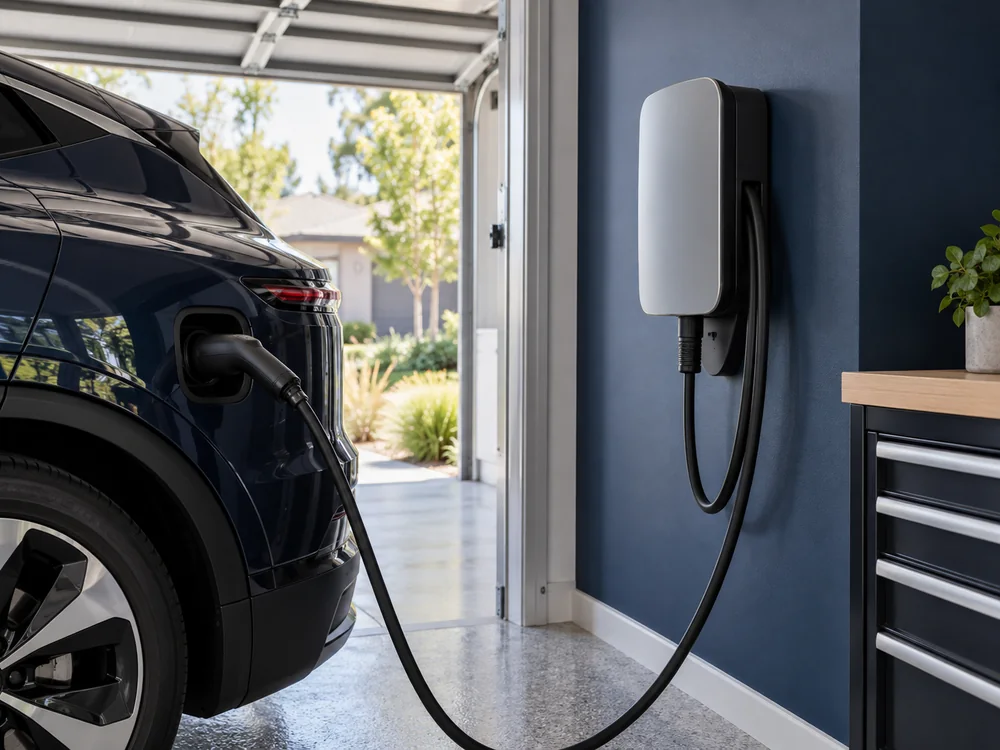
Picture the car in its usual spot. Which side is the charge port on? Will the cord reach if you back in? Can it stay clear of a walkway or the garage door? The route from the panel to the charger, access through finished walls and whether the equipment will be outside can all affect the estimate.
If there’s already a 240-volt outlet in the garage, have the circuit evaluated before counting on it for charging. Tell the electrician what the outlet was originally installed for and which charger you’re considering.
What to send when requesting an estimate
- Your job address and whether you park in a garage, driveway or carport.
- Your vehicle and charger model, if you’ve selected one.
- Your typical daily mileage and how long the car is parked at home.
- Photos of the parking area and the outside of the electrical panel, if easy to take. Leave the panel cover in place.
Planning home EV charging in Garland or the Dallas area?
Safe Plug Electric can review your parking setup and electrical capacity before you commit to equipment. Learn more about home EV charger installation or request an estimate.